

Fake Instagram Accounts and Brand Impersonation
May 19, 2026 · Updated July 8, 2026
Key takeaways
- Brand impersonation copies your logo, handle, and content to exploit the trust you built with your audience.
- Fake accounts can scam followers, collect payments, and damage a brand within hours of going live.
- Most businesses discover impersonation only after customers complain - too late to prevent the harm.
- Continuous social monitoring catches fake profiles early enough to report and remove them.
Social media has become one of the most valuable assets for modern businesses. Brands invest years building audiences, customer trust, and digital communities. However, the rise of fake Instagram accounts and brand impersonation has created a significant threat to businesses of all sizes.
How brand impersonation works on Instagram
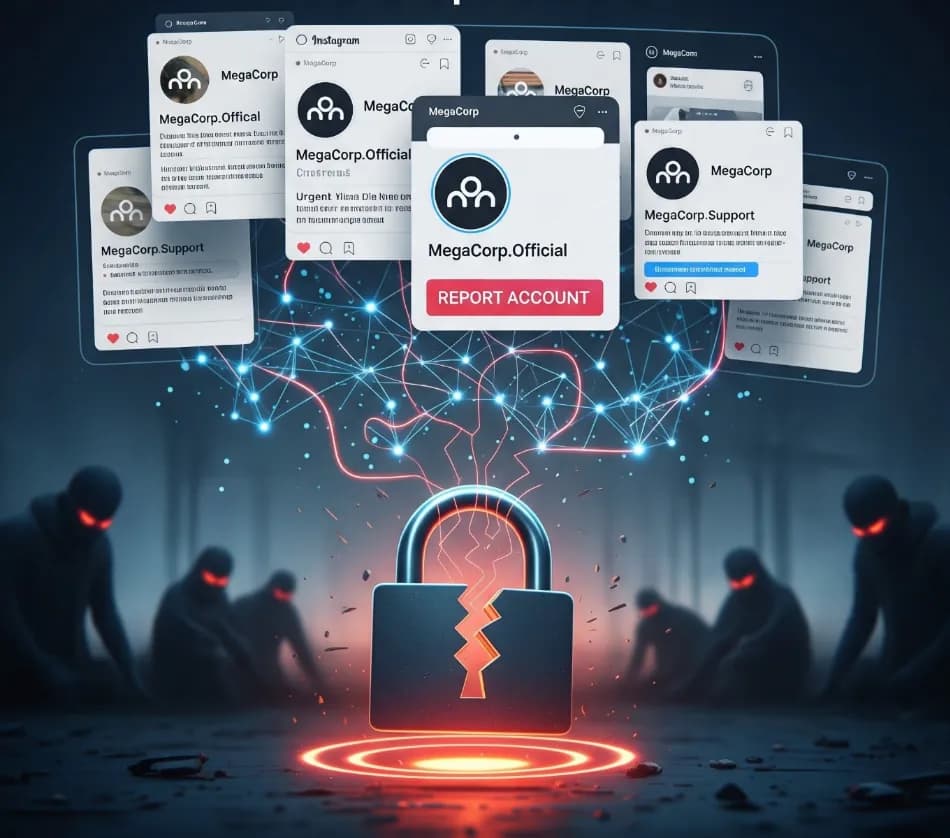
Impersonation accounts often copy a company's logo, branding, photographs, and content to create a false sense of legitimacy. These accounts may mislead customers, promote fraudulent offers, solicit payments, collect personal information, or damage a brand's reputation. In some cases, customers are unable to distinguish between genuine and fake accounts, resulting in financial loss and erosion of trust.
Impersonation moves fast: a convincing fake profile can run giveaways, collect payments, or message your followers within hours of going live. Monitoring for lookalike handles, cloned bios, copied post grids, and unauthorized use of your logo lets you report and remove an account before it converts your audience's trust into someone else's fraud.
Which brands impersonators target most
D2C brands, influencers, clinics, educational institutions, and hospitality businesses are particularly vulnerable because of their strong online presence. The larger the audience, the greater the likelihood that bad actors will attempt to exploit the brand.
Why proactive monitoring matters
Many businesses only discover impersonation after customers begin complaining. By that stage, substantial damage may already have occurred. This is why proactive monitoring is critical. Organizations should regularly monitor social media platforms for unauthorized accounts, misleading usernames, fraudulent advertisements, and misuse of trademarks or brand assets.
Digital Reputation Safety is no longer limited to managing publicity. It now requires active monitoring, early detection, and coordinated response mechanisms to protect customers and brand integrity.
How DiReFTY responds to impersonation
At DiReFTY, we help organizations identify and respond to impersonation threats before they undermine trust. In a digital-first economy, protecting your identity is just as important as building it.
Frequently asked questions
How do I report a fake Instagram account impersonating my brand?
Instagram provides an impersonation report flow for both accounts and specific posts. Reports succeed more often when you supply proof of the genuine brand - a verified handle, trademark, or official website - and clearly document how the fake account misuses your identity.
How can I tell if an Instagram account is impersonating my business?
Look for near-identical handles with small changes such as extra letters, underscores, or numbers, a copied bio and profile photo, reposted content from your real account, and DMs or offers your brand never made.
Why are D2C brands and creators targeted most?
The larger and more engaged your audience, the more valuable your identity is to a scammer. Brands and creators with strong followings offer impersonators a ready-made pool of people who already trust the name.
How does DiReFTY stop brand impersonation?
DiReFTY monitors social platforms for unauthorized accounts and misuse of your brand assets, then coordinates evidence and platform reporting to get impersonators removed before they erode customer trust.
Know your digital reputation exposure
Start with a free assessment of the threats targeting your brand across every channel.
Keep Reading