

Fake Reviews: How They Damage Businesses and What You Can Do About It
May 12, 2026 · Updated July 8, 2026
Key takeaways
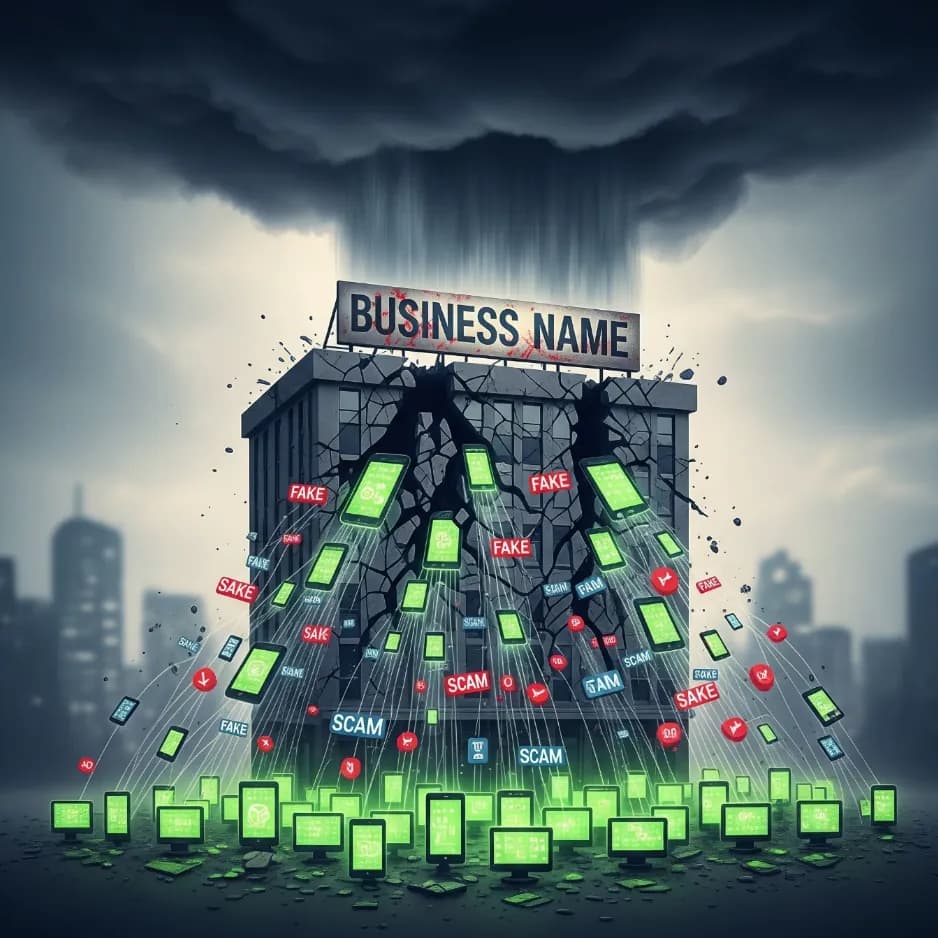
- Fake reviews are fabricated ratings posted to distort how a business appears on Google, marketplaces, and review platforms.
- A small cluster of fake one-star reviews can cut conversions before a customer ever makes contact.
- Platforms remove fake reviews only when policy violations are documented and reported correctly.
- Continuous monitoring catches coordinated campaigns early - before they move revenue.
In today's digital economy, customer trust is often built long before a customer visits a clinic, restaurant, hotel, or business premises. Most consumers now rely heavily on Google Reviews, social media feedback, and online ratings before making purchasing decisions. Unfortunately, this growing dependence on online reviews has also led to a rise in fake reviews and coordinated reputation attacks.
How fake reviews damage a business
Fake reviews can significantly damage a business. A doctor may lose patients because of misleading reviews posted by competitors or disgruntled individuals. Restaurants may experience reduced footfall after receiving multiple negative reviews from accounts that have never visited the establishment. Similarly, local businesses often find themselves struggling to defend their reputation against anonymous and fabricated allegations.
The impact extends beyond revenue. Negative reviews can affect brand perception, customer confidence, employee morale, and long-term business growth. Many businesses are unaware that review manipulation, fake review campaigns, and review extortion have become increasingly common across digital platforms.
How to spot a fake review campaign early
The first step towards protection is monitoring. Businesses should regularly track review platforms, identify suspicious review patterns, preserve evidence, and take timely action where reviews violate platform policies. Early detection often prevents larger reputational damage.
Coordinated campaigns tend to share fingerprints: a burst of ratings within a short window, reviewers with no purchase history or thin profiles, near-identical wording, or a sudden one-star drop with no matching customer record. Recognising these patterns - and preserving evidence before reviews are edited or deleted - is what makes removal possible under a platform's own policies.
Where protection begins
At DiReFTY, we believe that Digital Reputation Safety begins with awareness. By proactively monitoring reviews and identifying threats before they escalate, businesses can protect customer trust and maintain the credibility they have worked hard to build.
Digital trust is difficult to earn and easy to lose. Protecting it should be a business priority.
Frequently asked questions
How do you identify a fake review?
Fake reviews often arrive in clusters over a short period, come from accounts with no purchase history or sparse profiles, use repetitive or generic wording, and don't match any real customer record. A sudden ratings drop that none of your genuine customers account for is a common signal.
Can fake reviews be removed from Google?
Yes - platforms including Google remove reviews that violate their policies, but only when the violation is documented and reported correctly. Evidence and a policy-based report matter far more than simply flagging a review as unfair.
How much do fake reviews affect sales?
Most buyers filter by rating, so even a handful of fake one-star reviews that push you below the four-star line can remove you from consideration and measurably reduce conversions.
How does DiReFTY handle fake reviews?
DiReFTY continuously monitors reviews across platforms, separates coordinated fake campaigns from genuine criticism, preserves evidence, and files policy-based reports to get violating reviews removed - part of the Detect, Respond, Enforce, Protect framework.
Know your digital reputation exposure
Start with a free assessment of the threats targeting your brand across every channel.
Keep Reading