

Evidence, Takedown and Enforcement: What to Do After Finding Online Brand Abuse
The first instinct is to demand removal - but acting before preserving evidence can weaken enforcement. What to do first when you find your brand being misused online.
3 min read
On this page
Key takeaways
- Preserve evidence before demanding removal; acting first can make enforcement harder.
- Websites, domains, marketplaces, social accounts, and ads may each need a different enforcement pathway.
- Check whether the same actor operates elsewhere - sites often have linked accounts, listings, or domains.
- A takedown solves one incident; monitoring catches repeat offenders.
“I have found someone misusing my brand online. What should I do first?”
The first instinct is often to demand immediate removal. However, acting before preserving evidence can make subsequent enforcement more difficult.
Different abuse, different pathways
Online infringement can involve websites, domains, marketplaces, social-media accounts, advertisements, counterfeit listings or unauthorised use of trademarks. Each may require a different enforcement pathway.
Identify the source - and where else it operates
Identify the exact source of the misuse and determine whether the same actor is operating elsewhere. A suspicious website may have associated social accounts, marketplace listings or additional domains.
What, where, and when: preserving evidence
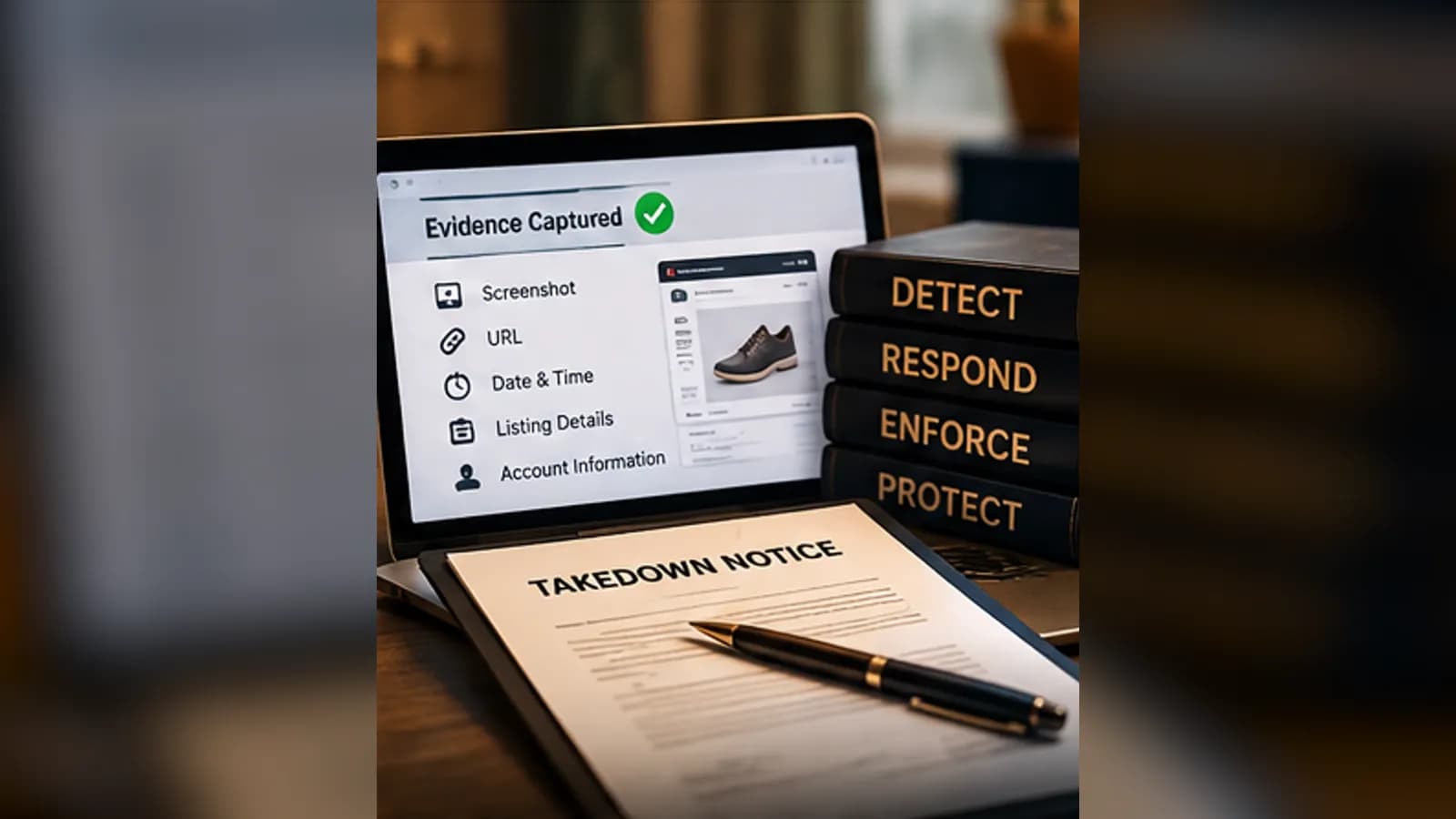
Preserve screenshots, URLs, dates, account names, seller information, advertisements, product details and other relevant digital records. Evidence should ideally establish what was found, where it was found and when it was found.
Choosing the enforcement route
Depending on the circumstances, enforcement may involve a platform takedown, intermediary complaint, domain action, cease-and-desist notice, trademark proceedings or litigation. The appropriate response depends on the nature and seriousness of the infringement.
A takedown is not prevention
A takedown solves a particular incident; it does not necessarily prevent recurrence. Continuous monitoring can identify repeat offenders and new instances of misuse without requiring a law firm to manually search the internet every time.
DiReFTY combines digital threat detection, evidence preservation, takedown support and IP enforcement workflows. Its approach is built around practical understanding of how brand disputes develop from initial detection into formal enforcement.
Frequently asked questions
I found someone misusing my brand online. What should I do first?
Preserve evidence before demanding removal: screenshots, URLs, dates, account names, seller information, and product details that establish what was found, where, and when. Then identify whether the same actor operates elsewhere.
Does a takedown stop the misuse for good?
Not necessarily. A takedown resolves one incident; continuous monitoring is what identifies repeat offenders and new instances of misuse.
Know your digital reputation exposure
Start with a free assessment of the threats targeting your brand across every channel.
Keep reading
Why Every Business Needs a Digital Reputation Safety Strategy
Reputation management used to be reactive. Modern digital threats demand a structured, proactive strategy built on Detect, Respond, Enforce, Protect.
GuideDPDP Act Compliance and Your Brand's Digital Trust
Data protection failures don't stay a compliance problem - they become a trust problem the moment customers find out. What DPDP non-compliance risks for a brand's reputation, and where readiness begins.